https://www.energyindepth.org/national/could-appalachian-basin-be-next-silicon-valley-american-energy-infrastructure/
Chevron, Peoples launch effort to boost Energy, manufacturing Industry
From the Pittsburgh Business Times:
https://www.bizjournals.com/pittsburgh/news/2017/09/27/chevron-peoples-launch-effort-to-boost-energy.html
https://www.bizjournals.com/pittsburgh/news/2017/09/27/chevron-peoples-launch-effort-to-boost-energy.html
Chevron, Peoples launch effort to boost energy, manufacturing industry
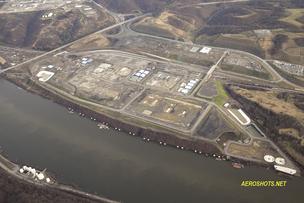
Aerial view of development around the ethane cracker project in Beaver County.
A report released Wednesday by two of the region’s biggest natural gas companies lays out a strategy to help boost Pennsylvania’s economy, including a comprehensive plan to supercharge the burgeoning petrochemical industry.
Chevron Appalachia and Peoples Natural Gas commissioned the Forge the Future study, which was unveiled by Chevron Appalachia President Stacey Olson and Peoples CEO Morgan O’Brien during the first day of the Shale Insight conference in downtown Pittsburgh. The companies hope to start a private sector-led effort to get natural gas- and manufacturing-friendly policies to unlock what they called a potential $60 billion economic windfall and 100,000 more jobs over the course of the next 10 years.
I think it paints an incredibly exciting picture of the region’s economic future and lays out simple and achievable strategies that should serve as a road map Olson said. That’s if and only if we can realize the full potential of a natural resource under our feet. And that’s not necessarily a given.
RELATED: With cracker coming, Pittsburgh poised to become a major player in plastics
Forge the Future includes three recommendations:
- Create energy-based industry clusters around petrochemicals, advanced manufacturing and large data centers.
These can be clustered together to catalyze growth, Olson said.
That includes the creation of a petrochemical hub, along the lines of what the tri-state region is attempting, that will build a number of petrochemical plants in the region that would include three to five more ethane crackers beyond Shells $6 billion plant in Beaver County as well as facilities to make olefins, ammonia and other inorganic chemicals, as well as attracting manufacturers that make specialty products.
- Move forward quickly with pipeline projects to take natural gas from the Marcellus and Utica shales to market.
Key pipelines are needed now, Olson said. A viable upstream sector is the key to unlocking the economic development of the downstream (manufacturing).
- Increase the use of natural gas power and heating programs across Pennsylvania.
RELATED: How an Appalachian storage hub would be a regional effort
Peoples O’Brien asked the Shale Insight audience to help with the Forge the Future effort, and said that no one was taking the initiative right now at any level. He said that’s why Peoples was enthusiastic about Forging the Future. We want to be a part of the excitement of what the future of the incredible resource we have and trying to connect the dots for people, and help them literally see the opportunity we have in front of us, he said.
He said it was a nonpartisan effort and it didn’t matter what party was in charge.
If we all work together, we’ll execute this, O’Brien said. This is the future of the state, and all of you can play a helpful part in that.

Ethane Storage can create many Jobs
WVU study: Ethane storage can create 100K jobs
Heraldstaronline.com
AUG 31, 2017
CANONSBURG, Pa. West Virginia University researchers believe a Marcellus and Utica shale ethane storage hub could help create $36 billion in investment and more than 100,000 permanent jobs some of which could occur at industrial sites left behind by Wheeling-Pittsburgh Steel, Weirton Steel and Ormet Corp.
During a Tuesday conference, WVU Energy Institute Director Brian Anderson said drillers throughout the region now are producing about 460,000 barrels of ethane per day almost three times the total amount of ethane expected to be used per day at the Royal Dutch Shell ethane cracker set for Beaver County, Pa., and the potential PTT Global Chemical cracker at Dilles Bottom, combined.
For several years, industry leaders have said one of the major hurdles to building ethane crackers in Ohio, West Virginia and Pennsylvania is a lack of storage capacity, which they said is necessary to ensure a continued supply of ethane to the plant in the case of a pipeline rupture. On Tuesday, Anderson and fellow researchers identified several areas throughout the region that feature favorable geology for such ethane storage.
All or portions of several Upper Ohio Valley counties have areas meeting the researchers specifications, including Hancock, Brooke, Marshall, Wetzel and Tyler in West Virginia and Jefferson, Harrison and Monroe in Ohio.
Appalachia is poised for a renaissance of the petrochemical industry due to the availability of natural gas liquids, Anderson said. A critical path for this rebirth is through the development of infrastructure to support the industry. The Appalachian Storage Hub study is a first step for realizing that necessary infrastructure.
Ethane is one of the liquid forms of natural gas prevalent in the Marcellus and Utica region. An ethane cracker transforms this material into ethylene, which eventually becomes plastic.
About 12 miles south of the proposed PTT ethane cracker, Denver-based Energy Storage Ventures hopes to begin storing ethane before the end of 2019 at Clarington. Officials said the ethane would be pumped into and out of the underground caverns through pipelines.
This portion of Monroe County is in one of the zones researchers identify as having the geology for ethane storage. The three criteria for an area to qualify as top-rated are:
¯ An underground wall of salt that is at least 100 feet thick.
¯ A wall of limestone at least 40 feet thick.
¯ Existing sandstone reservoirs that can be converted for use.
Some Marcellus and Utica shale ethane now is being shipped out of the region for cracking via pipelines such as the Sunoco Logistics Mariner East and Mariner West projects, as well as the ATEX Express.
Kinder Morgan also is building the $500 million Utopia Pipeline to send up to 75,000 barrels of ethane to Canada each day.
Anderson said these operations prevent the region from gaining the liquids full economic development benefit.
Ethane, propane and butane have much more value than we are realizing, he said.
Anderson said the process of creating more than 100,000 jobs would take several years, or even decades, to complete. He said part of this could involve public-private partnerships to redevelop former industrial sites, including former steel mills, aluminum plants, glass factories, etc.
He said some of these sites may be eligible for cleanup grants under the U.S. Environmental Protection Agency Superfund program.
We have a lot of old manufacturing sites that have been left behind. The sites could be redeveloped for use and given new life, Anderson said.
West Virginia Oil and Natural Gas Association Executive Director Anne Blankenship said having an ethane storage hub in Appalachia would benefit the market in the face of catastrophic events, including storms such as Harvey in Texas and Louisiana.
The debilitating effects of a hurricane on the Gulf Coast point to the need for creation of another large storage hub in the U.S., geographically distant from the Gulf Coast, she said.
The study was funded via a $100,000 grant from the Claude Worthington Benedum Foundation, along with another $100,000 from numerous drilling, fracking and processing companies.
Recognition of the enormous opportunity for economic development based upon shale gas, including downstream modern manufacturing, was the motivation for the governors of West Virginia, Ohio and Pennsylvania to agree to collaborate to maximize the opportunity, Benedum Foundation President William Getty said of the October 2015 agreement.
Paul Boulier, vice president for Team Northeast Ohio, said the report will provide potential developers the data they need to make informed investment decisions.
Being able to store valuable feedstock will help develop midstream and downstream opportunities that will make us even more competitive on a global and national basis he said.
Shell reaches agreement on Air Quality
From the Pittsburgh Business Times:
https://www.bizjournals.com/pittsburgh/news/2017/08/28/shell-environmentalists-reach-agreement-on-cracker.html
https://www.bizjournals.com/pittsburgh/news/2017/08/28/shell-environmentalists-reach-agreement-on-cracker.html
Shell, environmentalists reach agreement on cracker air quality
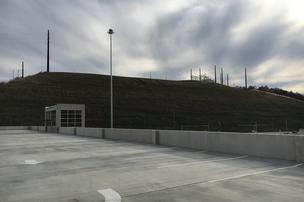
The hill behind the new parking garage once extended over the entirety of the site on which the garage was built. Overall, Shell moved 7 million cubic yards of dirt as part of the cracker site preparation.
Shell Chemical Appalachia and two environmental groups have reached an agreement on air quality monitoring in and around the Beaver County location that will house the ethane cracker.
A news release Monday afternoon from the Clean Air Council and Environmental Integrity Project said Shell has agreed to build a fenceline air monitoring program that will complement another monitoring system at the plant site in Potter Township, as well as more tests for flares from the plastics manufacturing facility. The fenceline monitors will measure for emissions and will be investigated by Shell if it registers at a specified level. The measurements will be available to everyone on a website.
A spokesman for Shell wasn’t immediately available for comment, although a comment from Ate Visser, vice president of the Shell ethane cracker plant, was included in the news release.
“We are pleased to have reached this settlement, and now our full focus will be on delivering the facility, with its state-of-the-art operations and environmental controls, which will bring jobs and economic benefits to many western Pennsylvania families for decades to come,” Visser said in the statement.
The environmental groups had filed an appeal in 2015 of the permit from the Pennsylvania Department of Environmental Protection, wanting more from Shell in terms of compliance with the environmental regulations governing the plant that will be built and operating next decade.
“Fenceline monitoring is a critical tool that allows nearby community members and the plant’s workers to feel confident that the plant is operating pursuant to its permit terms,†said Joseph Otis Minott, executive director and chief counsel of the Clean Air Council, in a statement. “Residents being asked to host large industrial facilities have a right to be assured that the plant is meeting its legal requirements.”
Strip Development Project receives TIF
TIF’s continue to be an important economic development tool at the local level. Can determine whether a project can move forward or not.